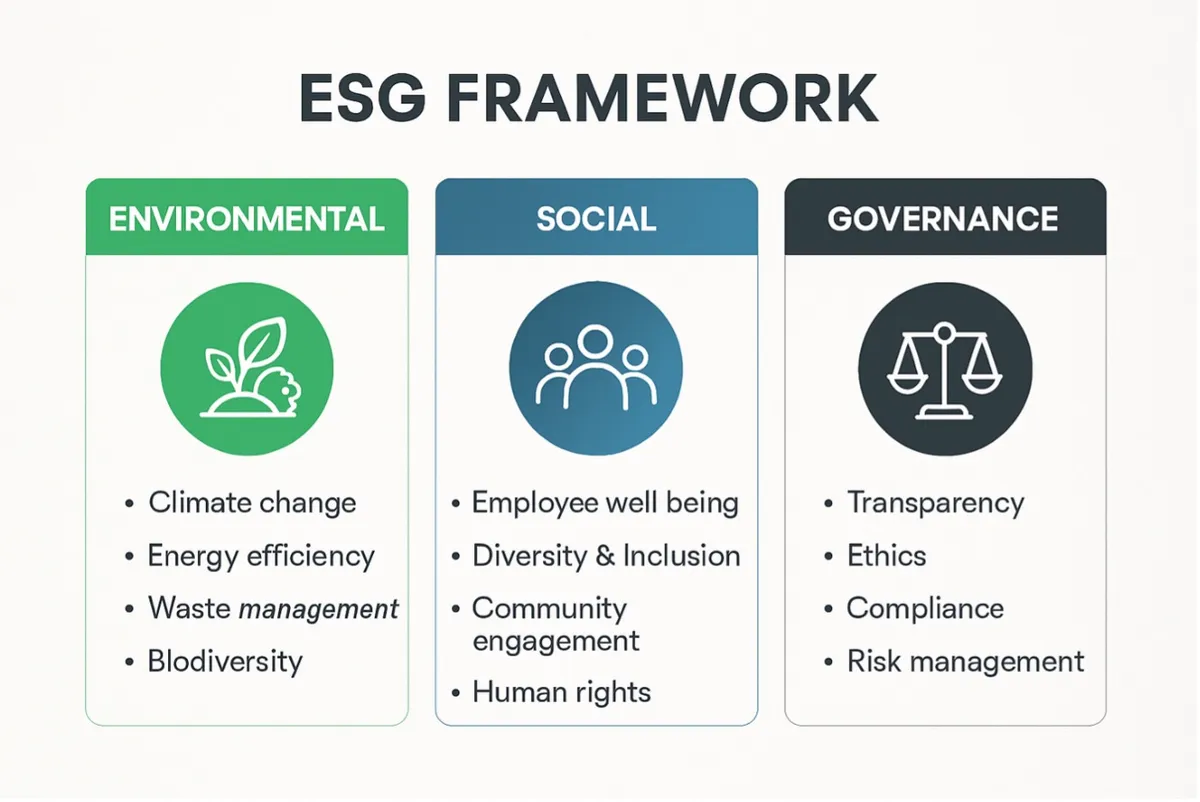
Sustainability reporting in Ghana has moved quickly from a voluntary extra to a mainstream expectation. The Bank of Ghana’s Sustainable Banking Principles brought environmental and social risk into the banking sector in 2019, and the Ghana Stock Exchange’s ESG Disclosures Guidance Manual set expectations for listed companies in 2022. The next step is the arrival of the International Sustainability Standards Board’s first two standards, IFRS S1 and IFRS S2, which the Institute of Chartered Accountants, Ghana (ICAG) has moved to adopt.
This article explains what the two standards require, who in Ghana is likely to be affected and what boards and finance teams can do now to prepare.
What are IFRS S1 and IFRS S2?
The International Sustainability Standards Board (ISSB) sits alongside the International Accounting Standards Board under the IFRS Foundation. In June 2023 it issued its first two standards, effective for annual reporting periods beginning on or after 1 January 2024 in jurisdictions that adopt them.
IFRS S1, General Requirements for Disclosure of Sustainability-related Financial Information, sets the overall framework. It requires a company to disclose information about the sustainability-related risks and opportunities that could reasonably be expected to affect its cash flows, its access to finance or its cost of capital over the short, medium or long term. The focus is investors and lenders: what matters is the effect of sustainability matters on the company, not a general account of the company’s good works.
IFRS S2, Climate-related Disclosures, applies that framework to climate. It requires disclosure of physical risks, such as flooding, drought and heat stress, and transition risks, such as changes in regulation, technology, energy prices and customer preferences as economies move towards lower emissions.
Both standards are organised around four pillars that will be familiar to anyone who has followed the recommendations of the Task Force on Climate-related Financial Disclosures:
- Governance – how the board and management oversee sustainability-related risks and opportunities;
- Strategy – how those risks and opportunities affect the business model, strategy and financial position, now and in the future;
- Risk management – how the company identifies, assesses and manages them; and
- Metrics and targets – how performance is measured, including, under IFRS S2, greenhouse gas emissions across Scope 1, Scope 2 and Scope 3.
What is the position in Ghana?
ICAG, as the body responsible for accounting and reporting standards in Ghana, has announced the adoption of IFRS S1 and IFRS S2 with a phased approach, making Ghana one of the early adopters on the continent. The detail of which entities must report, and from when, matters a great deal for planning, so check the current position with ICAG or speak to us about how it applies to your organisation.
In practice, the companies most likely to be affected first are those with public accountability: listed companies, banks and other regulated financial institutions, insurers and large state-owned enterprises. But the effects will travel further. A bank that has to report on the climate risk in its loan book will ask its borrowers for information. A listed manufacturer reporting Scope 3 emissions will ask its suppliers. Exporters selling into Europe and multinational subsidiaries reporting to their parents are already facing similar requests.
In other words, even if your company is not in the first wave, you may be asked for sustainability data sooner than you expect.
How the standards differ from what many companies do today
Many Ghanaian companies already publish a sustainability or corporate social responsibility report, often prepared using the Global Reporting Initiative (GRI) Standards, which the GSE manual draws on. GRI focuses on a company’s impacts on the economy, environment and people. The ISSB standards ask a different question: how do sustainability matters affect the company’s prospects?
The two approaches are complementary rather than competing, but there are important differences in practice:
- Connection to the financial statements. IFRS S1 requires sustainability disclosures to be published at the same time as the financial statements and to cover the same reporting entity and period. Assumptions should be consistent with those used in the accounts, for example in impairment testing.
- Forward-looking information. Companies must explain the anticipated effects of risks and opportunities, including climate resilience under different scenarios. This is a step beyond describing past activities.
- Board accountability. The governance disclosures require a clear account of who oversees these issues and how. Boards will need to show real engagement, not simply approve a report.
- Data quality. Emissions and other metrics must be measured using recognised methodologies, such as the Greenhouse Gas Protocol, and should be capable of assurance.
Transition reliefs
The ISSB recognised that companies need time to build capability, and the standards include reliefs for the first year of application. These include the option to report only on climate in the first year (applying IFRS S1 only to the extent it relates to climate), relief from disclosing Scope 3 emissions in the first year, relief from providing comparative information, and the ability to publish the first sustainability report after the financial statements. Adopting jurisdictions may set their own transition arrangements, so check the ICAG requirements that apply to you.
Reliefs buy time; they do not remove the work. Companies that use the first year well will be in a much stronger position when full requirements apply.
Common challenges for Ghanaian companies
From our work with clients, we expect the main challenges to be practical rather than conceptual:
- Data. Fuel, electricity and generator usage, water consumption and waste are often recorded across different sites and systems, if at all. Supplier data for Scope 3 is harder still.
- Skills. Few finance teams have experience of climate scenario analysis or emissions accounting, and the market for specialist expertise is thin.
- Ownership. Sustainability reporting often sits with a communications or CSR team, away from finance and risk. The ISSB standards need these functions to work together.
- Cost. New systems and external support cost money. Proportionality matters, and the standards allow companies to use reasonable and supportable information available without undue cost or effort.
Six steps to take now
- Confirm your position. Establish whether and when you fall within scope of ICAG’s requirements, and whether lenders, investors, parents or customers are already asking for ISSB-aligned information.
- Assign responsibility. Agree board-level oversight, through the audit committee or a dedicated committee, and a management lead who brings finance, risk and operations together.
- Identify your material risks and opportunities. Start with climate. Consider physical exposure of sites and supply chains, regulatory and market changes, and opportunities such as energy efficiency or new products.
- Run a gap analysis. Compare what you currently report and measure against the IFRS S1 and S2 requirements, and prioritise the gaps.
- Build the data. Begin measuring Scope 1 and Scope 2 emissions now, with documented methods and controls, so that you have a baseline before reporting becomes mandatory.
- Plan for assurance. Treat sustainability data with the same discipline as financial data. Assurance is likely to be expected, and auditable records are much easier to build from the start.
An opportunity as well as an obligation
It is easy to see the ISSB standards as another compliance burden. But the questions they ask – what could disrupt our business, how resilient is our strategy, do we understand our energy use – are the questions good boards should be asking anyway. Companies that answer them credibly will find it easier to raise finance, win international customers and demonstrate long-term value.
Parker Russell Ghana supports organisations with ESG strategy, readiness assessments and sustainability reporting. If you would like to discuss what IFRS S1 and S2 mean for your organisation, please contact us.